Aksoy Çilingir
24/7 Emergency Locksmith & Lock Systems
Most people only think about their lock when it breaks or when a key goes missing. Yet the security of your door rests largely on a single component: the cylinder, or barrel. However solid your door may be, a weak cylinder undermines the entire chain.
The good news is that changing a cylinder is far simpler and cheaper than changing a door. To make the right choice, you only need to understand a handful of basic concepts.
What exactly is a cylinder
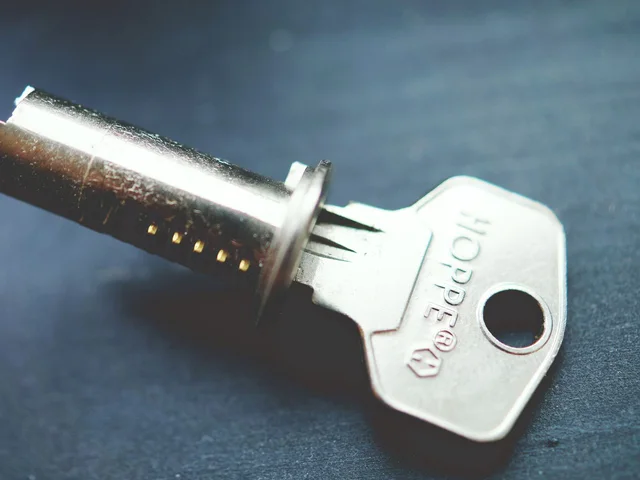
The cylinder is the barrel-shaped part you push the key into and turn. It's what drives the mechanism inside the door — you could call it the brain of the lock. It can be removed and fitted independently of the lock body bolted to the door, which is why upgrading your security usually means changing nothing more than the cylinder.
Cylinders come in standard sizes and are chosen to match the thickness of the door. Getting the measurement right matters: a cylinder that protrudes too far can be gripped and snapped from outside. A technician who measures your door and recommends accordingly is worth far more than one who simply names a good brand.
What the security grades tell you
Cylinder security is usually expressed in grades, and those grades indicate how well the cylinder resists specific methods of attack. Lower grades are intended for everyday use and basic protection; higher grades add layers of defence against snapping, drilling, pulling and key duplication.
In practice, what matters is matching the grade to the real risk your door faces. A ground-floor door opening straight onto the street and a top-floor flat in a gated complex simply don't have the same needs. Overpaying for more than you need is a mistake — but so is settling for less.
The attack methods you'll actually see
The most common attacks on cylinders are snapping, drilling, pulling and duplication. Snapping breaks the cylinder in two; a good cylinder has a controlled break point at exactly that spot, so the mechanism stays protected. Hardened steel pins defend against drilling, while specially shaped bodies resist pulling.
Duplication is a different matter entirely: certified key systems exist to stop your key being copied without permission, and those keys can only be cut at an authorised point on presentation of documentation. If your key has ever spent time in someone else's hands, that feature is genuinely valuable.
When to change your lock
In some situations there's no debate: you've lost a key, your key has been in a stranger's hands for a while, or you've moved into a new home. In a new place you can never know how many keys the previous tenant, a tradesperson or an acquaintance still has — changing the cylinder the moment you move in is the cheapest security investment available.
Beyond that, a key that turns stiffly, a lock that catches, or a key that's hard to pull back out are all warning signs. They usually mean the mechanism is wearing out; replacing it before it seizes entirely is a great deal better than being locked out.
Systems that run on one key
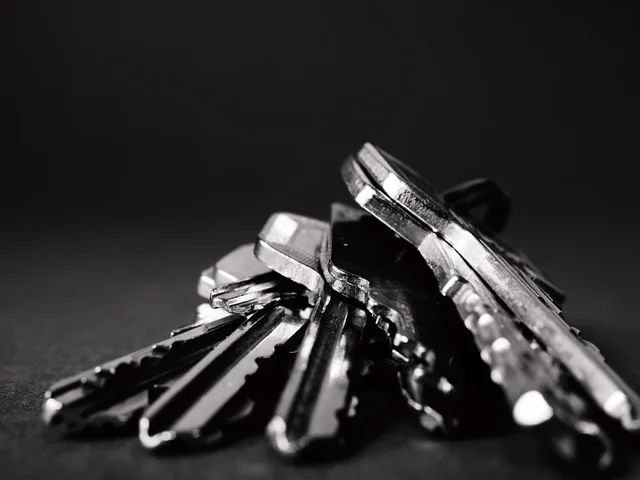
If you have several doors — a flat, a building entrance, a storeroom, a workplace — they can all be set up to open with a single key. Your keyring gets lighter and you never have to work out which key belongs to which door. The same logic covers systems where a manager's key opens every door while each flat's key opens only its own.
Planning matters when a system like this is built; you need to decide from the outset which key opens what. Done properly it delivers both convenience and control, and if a key is lost you only need to renew the group it belongs to.
You're not choosing alone
Choosing a lock isn't a matter of browsing a catalogue and buying the most expensive item. Your door type, its location, how often it's used and your genuine level of risk all need weighing together. A good technician lays out the options, explains the differences and leaves the decision to you — focused on solving the problem, not on selling.
If you're unsure which cylinder fits your door, ask us. We'll measure it on site, assess the current setup, and lay out a few suitable options with their prices, openly and clearly.